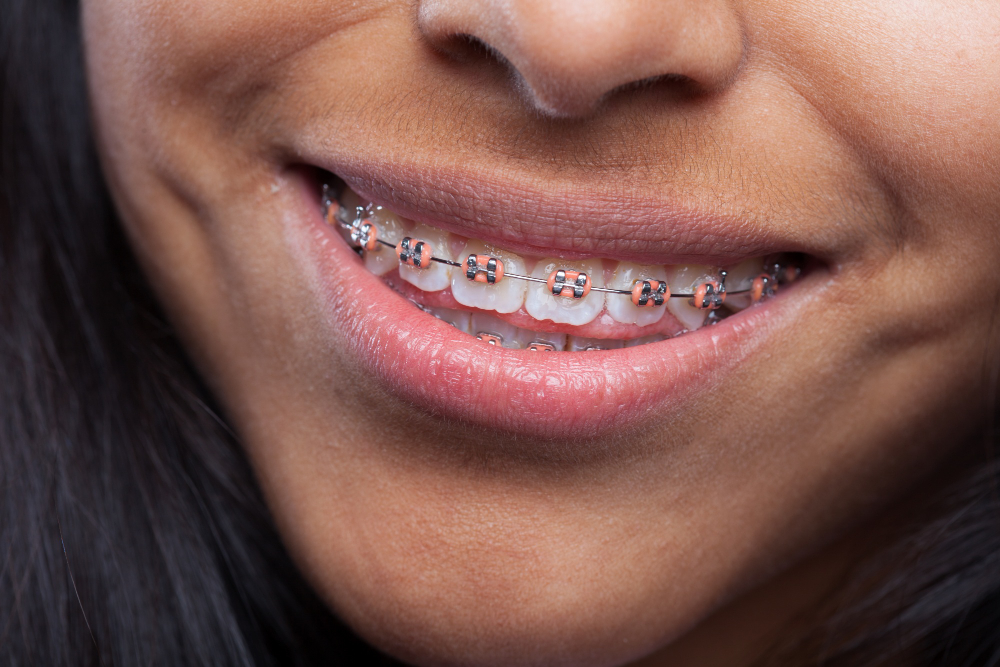
At Foster Orthodontics, full braces treatment costs between $3,500 and $7,000, and clear aligners land in a similar range. Your exact fee depends on three things: how complex your bite is, which appliance you choose, and how long treatment takes. Dr. Foster reviews your fee in writing at a free consultation — one all-in price that includes one set of retainers — so you know the number before you commit.
Braces and Aligner Prices by Treatment
Traditional Metal Braces
18–24 months
The most economical option and the most predictable. Works on complex bites.
Ceramic (Tooth-Colored) Braces
18–24 months
Metal brackets with clear, tooth-colored ties. Less noticeable, same results.
Clear Aligners (Invisalign)
12–24 months
Removable and nearly invisible. Best for mild to moderate crowding and spacing.
Phase 1 Early Treatment
Ages 7–10 · 9–18 months
Corrects jaw and bite problems while growth is still happening. Sometimes followed by a second phase.
Retainers After Treatment
Ongoing
One set of retainers after treatment, plus your first retainer check. Replacements quoted separately.
Example: $3,500 of treatment over 24 months comes to about $146 a month with 0% interest financing.
What Your Treatment Fee Includes
Your fee is one all-in price, not a starting number. It covers your care from your first scan to the day your retainers are fitted:
- Comprehensive records — digital 3D scan, photos and X-rays
- A custom treatment plan built and supervised by Dr. Foster
- Every braces or aligner adjustment at every scheduled visit
- Emergency visits for broken brackets, poking wires or lost trays
- One set of retainers after treatment, fitted when your case finishes
- Your first retainer check
- Progress photos at each stage
What Changes the Cost of Braces
No two smiles are the same, so no two quotes are the same. These are the factors that move your fee up or down:
- How complex your bite is. Mild crowding can finish in a year. Impacted teeth, crossbites or a jaw discrepancy take longer and cost more.
- The appliance you choose. Metal braces cost least. Ceramic braces and clear aligners carry a premium for aesthetics and lab work.
- Age and growth. Correcting a jaw problem in a growing nine-year-old is often simpler and less expensive than correcting it in an adult.
- One phase or two. Some children need early treatment now and full braces later. Others need a single round. That is the biggest swing in cost for kids.
- How long treatment takes. More months means more visits, more wire changes and more time in the chair. Missed appointments and broken brackets stretch it out.
- Any extra appliances. Expanders, temporary anchorage devices, impacted-tooth exposure with an oral surgeon or extractions coordinated with your dentist are quoted separately when needed.
Insurance, HSA and FSA
Most dental plans include an orthodontic benefit, but the details matter more than the sticker price. A typical plan pays a percentage of treatment up to a lifetime maximum — often $1,000 to $2,000 — and many plans require you to be enrolled before treatment starts. We will verify your orthodontic benefits in writing before you begin, so you know what insurance covers and what you will pay. Bring your insurance card to your consultation and we will run the numbers with you.
Braces, aligners and retainers are qualified medical expenses, so you can pay with HSA or FSA dollars. Ask us about timing your payments to fit your plan year.
We Are In-Network With:
- Aetna
- Aflac
- Anthem/BCBS
- Assurant/DHA/Sunlife
- Cigna PPO
- Delta Dental PPO
- Guardian PPO
- Humana PPO
- MetLife
- United Healthcare
Don’t see your plan? Call us at (470) 508-0085 and we will check your benefits for you.
Monthly Payment Plans
Every treatment can be split into monthly payments, and we offer multiple payment options so you can choose the one that fits your family’s budget:
- 0% in-house financing — spread your fee over your treatment with no interest.
- Third-party lenders — for families who want extended payment terms and a lower monthly amount.
You will see your payment plan in writing before you sign anything, so the monthly number is never a surprise.
Braces vs. Clear Aligners: Cost Comparison
Metal Braces
- Look: Noticeable
- Daily effort: Nothing to remember
- Best for: Complex bites, kids and adults
Ceramic Braces
- Look: Subtle
- Daily effort: Nothing to remember
- Best for: Adults and teens who want less notice
Clear Aligners
- Look: Nearly invisible
- Daily effort: 20–22 hours of wear a day
- Best for: Mild to moderate crowding
Clear aligners usually cost about the same as ceramic braces and a little more than metal braces. The right choice depends on your bite and your routine: aligners only work when you wear them 20 to 22 hours a day, and complex bites often finish faster and more predictably with braces. Dr. Foster will tell you which options fit your case at your consultation.
Get Your Exact Price at a Free Consultation
The ranges on this page are real, but a range isn’t a quote. Your exact fee depends on your bite, the appliance you choose and how long treatment will take — and that takes an exam to know.
Plan on 30 to 45 minutes. Your free consultation includes a digital scan and photos, Dr. Foster’s exam, your treatment options with fees and monthly payments, and insurance verification. You leave with a written fee and time to ask every question you have. There is no obligation to start treatment that day.
Call (470) 508-0085 or book online to schedule your free consultation.
Book OnlineWhy Families Choose Foster Orthodontics
We focus on making sure your treatment is efficient, affordable, and effective. Dr. Desmond Foster has created more than 300 smiles in Lawrenceville and earned 120+ five-star reviews from families across Gwinnett County. Our office runs on digital scanning instead of goopy impressions, treats kids and adults under one roof, and keeps appointments efficient enough for a school-night schedule. We are on Atkinson Road, a short drive from Duluth, Snellville, Grayson and Dacula.
Braces Cost: Frequently Asked Questions
How much do braces cost in Lawrenceville, GA?
Full metal braces usually run $3,500 to $6,500, ceramic braces $4,000 to $7,000, and clear aligners $4,000 to $7,500. Your quoted fee depends on how complex your bite is and how long treatment takes. You get an exact number in writing at a free consultation.
Does dental insurance cover braces?
Most dental plans include an orthodontic benefit, typically a percentage of treatment up to a lifetime maximum of $1,000 to $2,000. Many plans cover children more generously than adults. We verify your benefits in writing before treatment starts so you know your out-of-pocket cost.
Can I pay for braces monthly?
Yes. We offer multiple payment options, including 0% in-house financing and third-party lenders for extended payment terms. For example, $3,500 over 24 months is about $146 a month.
Are clear aligners more expensive than braces?
Clear aligners usually cost $500 to $1,000 more than metal braces and about the same as ceramic braces. They also depend on you wearing them 20 to 22 hours a day. Complex bites often finish faster and more predictably with braces.
How much do braces cost for kids?
Full treatment for a child usually falls between $3,500 and $6,500. Early Phase 1 treatment, when it is needed, runs $1,500 to $3,500, and some children need a second phase later. A free consultation tells you which category your child is in before you commit to anything.
Does every child need Phase 1 treatment?
No. Phase 1 is for problems that are easier to correct while the jaw is still growing — crossbites, severe crowding, impacted teeth or damage from thumb sucking. Most children do well with a single round of treatment starting around age 11 or 12. We recommend a check by age 7 and again when the adult teeth come in.
Are braces cheaper at a general dentist?
Sometimes the headline price looks lower, but compare what is included: records, every adjustment visit, emergency repairs and retainers. An orthodontist’s fee usually covers more visits and more appliance options. Ask for the all-in number, not the starting number.
Does a longer treatment time change the price?
Yes. Fees are quoted for an estimated treatment window, and going well beyond it can mean additional visits or an extension fee. We estimate your time frame at the consultation and review it with you at each check-in.
Are ceramic braces worth the extra cost?
If being less noticeable matters to you, yes. Ceramic braces cost $500 to $1,000 more than metal and work just as well, though the brackets are slightly larger and the clear ties can stain between visits.
Can I use my HSA or FSA for braces?
Yes. Orthodontic treatment counts as a qualified medical expense, so braces, aligners and retainers can be paid with HSA or FSA money. We can time your payments to line up with your plan year.
Is there still a discount or special offer?
No. We have retired our seasonal promotions. Instead of a temporary discount with conditions attached, your fee is one all-in price that includes retainers and every adjustment visit — and you see the monthly payment before you start.
What happens at the free consultation?
Plan on 30 to 45 minutes: a digital scan and photos, Dr. Foster’s exam, your treatment options with fees and monthly payments, insurance verification, and time to ask questions. There is no obligation to start treatment that day.
Find Out What Your Braces Will Actually Cost
A free consultation includes a digital scan, Dr. Foster’s exam, a written fee, insurance verification and a monthly payment — with no pressure to start that day.
Call (470) 508-0085 or book online.
Book Online